
The right export package is not the strongest or the most expensive one. It is the one whose barriers match what will attack the product between the factory and the buyer’s warehouse. Moisture, oxygen, light, pests, crushing, leakage, contamination and customs rules are the attackers. Each packaging material resists some of them and fails against others. An exporter who understands this can choose packaging by logic, not by habit or by what the neighbour uses. This article sets out a simple method, then applies it to four categories of Nigerian exports.
| A FIVE-QUESTION METHOD FOR CHOOSING PACKAGING |
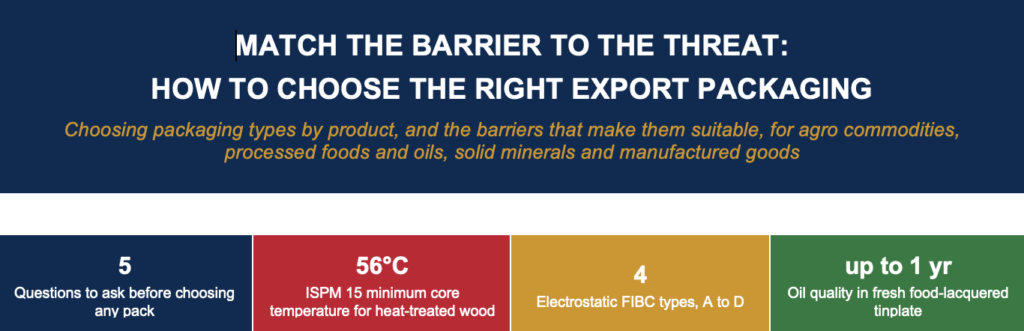
Ask five questions before buying any packaging. First, what harms this product: moisture, oxygen, light, insects, heat, shock or leakage? Second, how long must it last, from filling to shelf or processing plant? Third, what is the route: truck, port, sea voyage through humid air, and a warehouse at the other end? Fourth, what does the destination market require for materials, labelling and wood treatment? Fifth, what does the buyer do with the pack: sell it on a shelf, tip it into a hopper or process it? The answers point to the barrier you need, and the barrier points to the material. Then test: drop, compression and humidity trials on a sample pack cost little compared with a rejected container.
| AGRO COMMODITIES: MOISTURE AND INSECTS |
Agro commodities such as cocoa, sesame, ginger, cashew and beans are dry, living or hygroscopic products. Their enemies are moisture, which brings mould and mycotoxins, and insects. Traditional jute bags breathe, which suits cocoa and coffee that must not sweat, but they give no barrier against insects or humidity, so the produce must be dried, sorted and stored in a clean, dry warehouse and the bags must be clean, food-safe and free from contamination. Woven polypropylene sacks are stronger and cheaper but also let air through. For produce at risk from insects, hermetic liners or triple-layer bags such as PICS and ZeroFly create a low-oxygen space that suppresses insects without fumigation, provided the grain is dry when sealed. For a long ocean voyage, vapour-barrier container liners and desiccants reduce condensation, and dry pallets are used for loading.
| PROCESSED FOODS AND OILY PRODUCTS: OXYGEN AND LIGHT |
Processed foods and oily products need barriers against oxygen and light, since oil turns rancid when exposed to either. Packaging must also stop substances from the material migrating into the food and stop odours entering. Tinplate cans, with a food-approved lacquer, block light, oxygen and moisture and give the longest shelf life; fresh containers can keep oil quality for up to a year, but reused or scratched ones corrode and spoil the oil. Coloured glass is excellent but heavy and fragile. PET is light and clear but lets some oxygen through, so it needs coatings or a dark pack, and HDPE is tough and chemical-resistant with a moderate shelf life, and an opaque HDPE bottle blocks light. Flexible pouches are cheap and space-saving, but their barrier depends entirely on the film. For bulk shipments, drums, IBCs and flexitanks are used for edible oils. Whichever you choose, seal properly, print batch codes and expiry dates, and add the ingredient and nutrition labels the importing country demands.
| SOLID MINERALS: STRENGTH AND TRACEABILITY |
Solid minerals need strength, containment and traceability more than shelf life. The usual choice is the flexible intermediate bulk container, a large woven polypropylene bag that holds from a few hundred to several thousand kilograms and replaces many small sacks. Moisture-sensitive or fine products need barrier liners; baffles keep the bag square for safe stacking; tested, UN-marked bags are required if the material is classed as dangerous goods; and electrostatic types A to D matter only for dusty, combustible powders. Woven polypropylene sacks handle rough transport better than paper. Keep bags covered and dry at the mine gate and the port, because sun and rain weaken them. Whatever the format, each lot needs sealed closures, clean bags so that grades are not mixed, and a label showing mineral, grade, weight, lot and origin, since buyers sample and dispute shipments on exactly these points.
| MANUFACTURED GOODS: CRUSHING, HUMIDITY AND WOOD RULES |
Manufactured goods, from soap and cosmetics to building materials and beverages, face crushing, humidity and handling more than spoilage. Corrugated cartons graded for the stacking load, strapped and stretch-wrapped on pallets, with corner boards, anti-slip sheets and hooding, keep loads stable. Condensation in a hot container damages cartons and labels, so use desiccants or liners and abrasion-resistant printing for barcodes and batch codes. Wooden pallets and crates thicker than 6 millimetres must meet the international phytosanitary standard ISPM 15: heat-treated to at least 56 degrees Celsius at the core for 30 minutes and stamped with the IPPC mark, the country code and the producer number. One unmarked pallet can hold up a whole shipment, and consequences range from fumigation at the exporter’s cost to refusal and return. Plastic, metal and corrugated cardboard packaging are exempt.
Labelling is part of the package. It should carry the product name and description, net weight, batch or lot number, date, origin, handling marks and the importing country’s mandatory information, in the right language. Check that it will remain readable after humidity, abrasion and a long journey.
| PRACTICAL STEPS |
Practical steps follow. Draw up a packaging specification for each product and market. Buy from suppliers who can show food-grade or export-rated certificates. Run a drop, compression and humidity trial before the first order. Track loss by cause, such as bursts, moisture, infestation, taint and handling, and fix the biggest first. Use the packaging and labelling clinics offered by NEPC and the checks offered by NAFDAC and the Standards Organisation of Nigeria, and share equipment such as sealing machines through cluster associations. Reduce weight only after the pack passes tests under realistic conditions, and prefer mono-material designs that buyers can recycle.
Good packaging is engineering, not guesswork. Match the barrier to the threat, the format to the route and the label to the law, and the product arrives as it left.